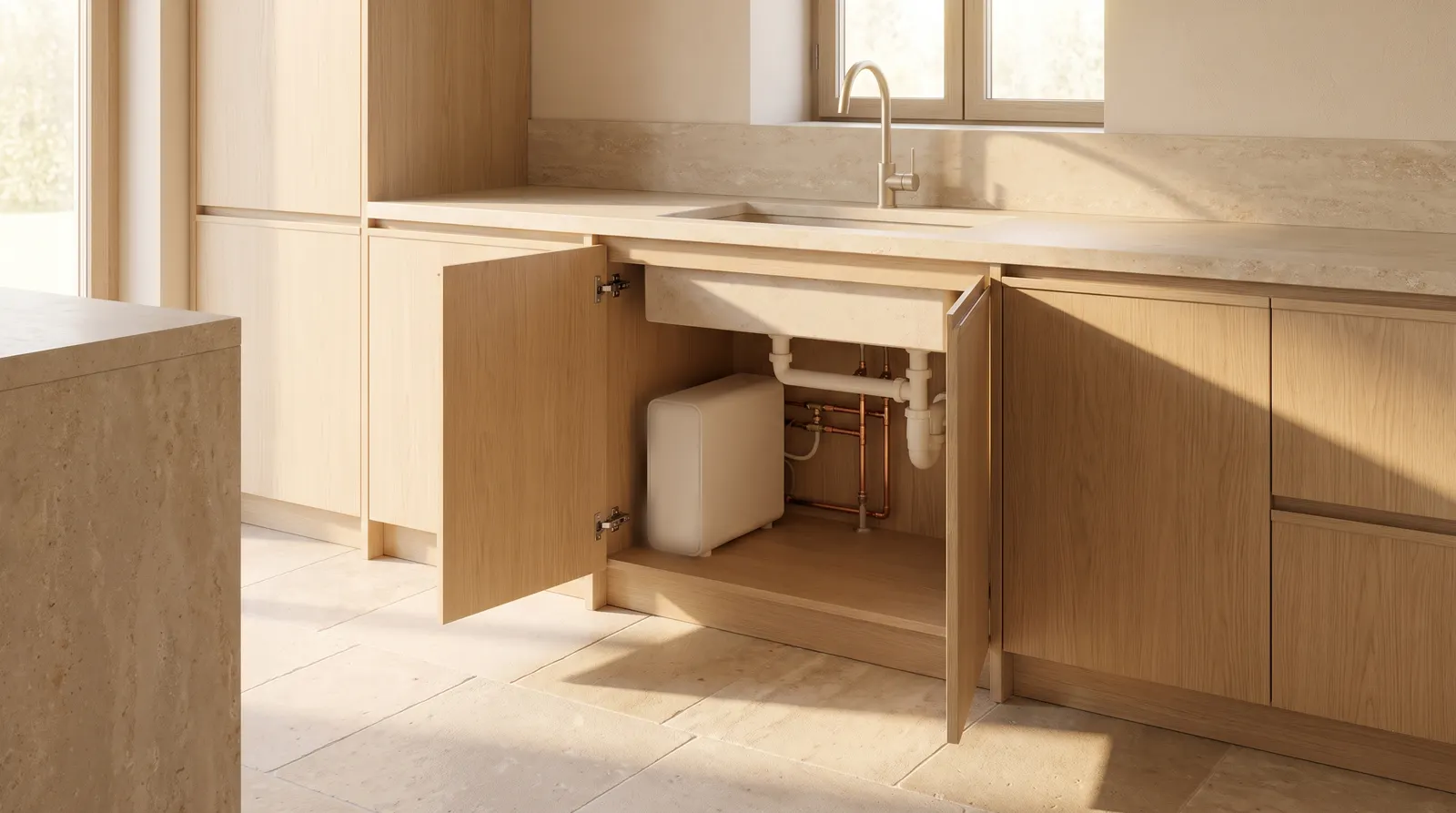
Point-of-use means treating water where it is drunk rather than where it enters the building. In dense urban housing that is frequently the only option available, and often the better one regardless.
The last hundred metres
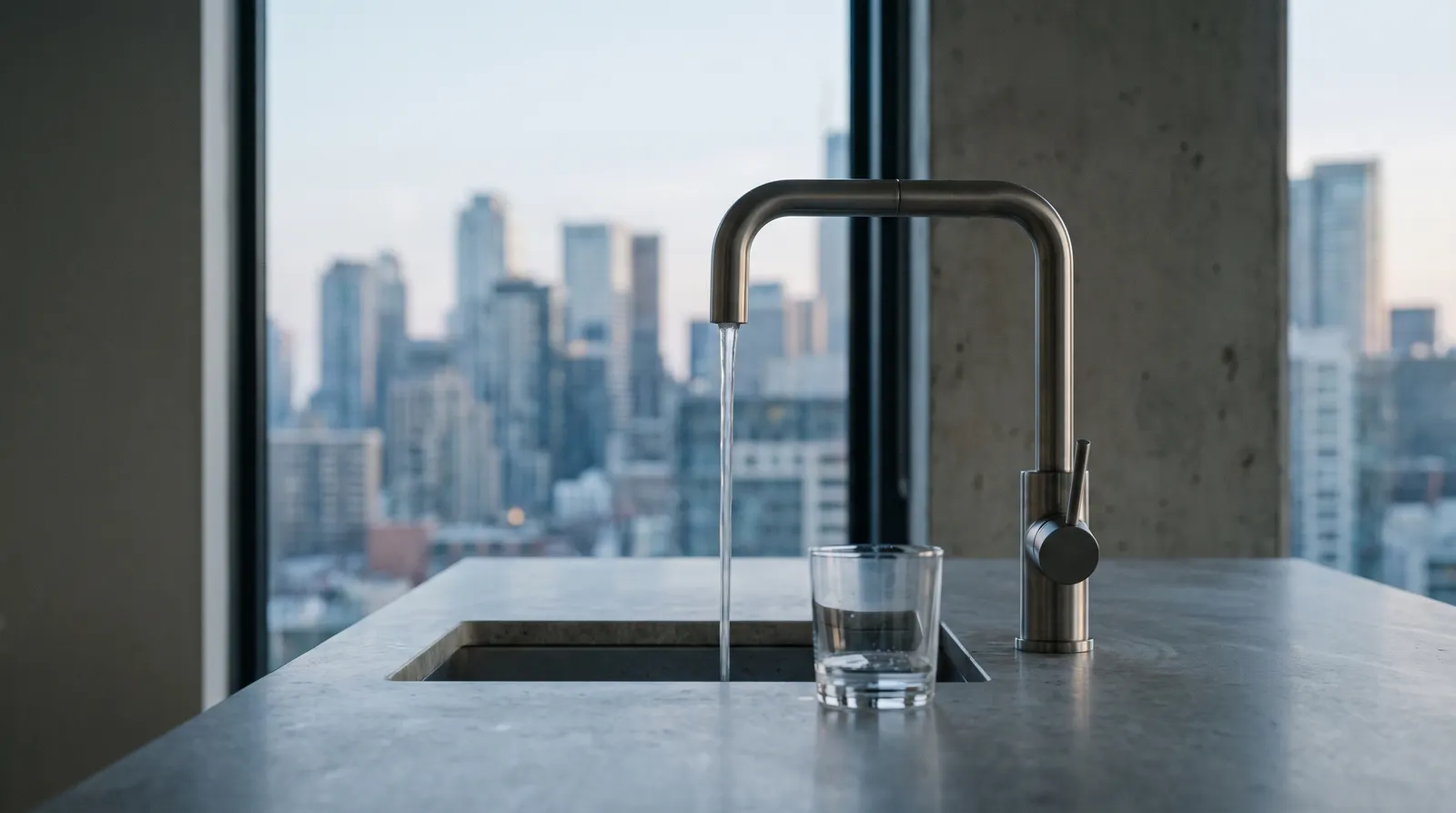
Water can leave a treatment works in good condition and arrive at a twentieth-floor tap in worse. Storage tanks, long risers, dead legs in the pipework and periods of low demand all act on it after the utility has finished its work. Treating at the tap is the only point at which what the drinker actually receives is what has been treated.
What makes it practical in a rented flat
- It fits inside a sink cabinet and needs no room of its own.
- It is installed on a branch, not on the building's main, so it needs no landlord's consent for structural work.
- It moves when the tenant does.
- A pump-free unit adds no socket to a kitchen that has none to spare.
Where it is the wrong answer
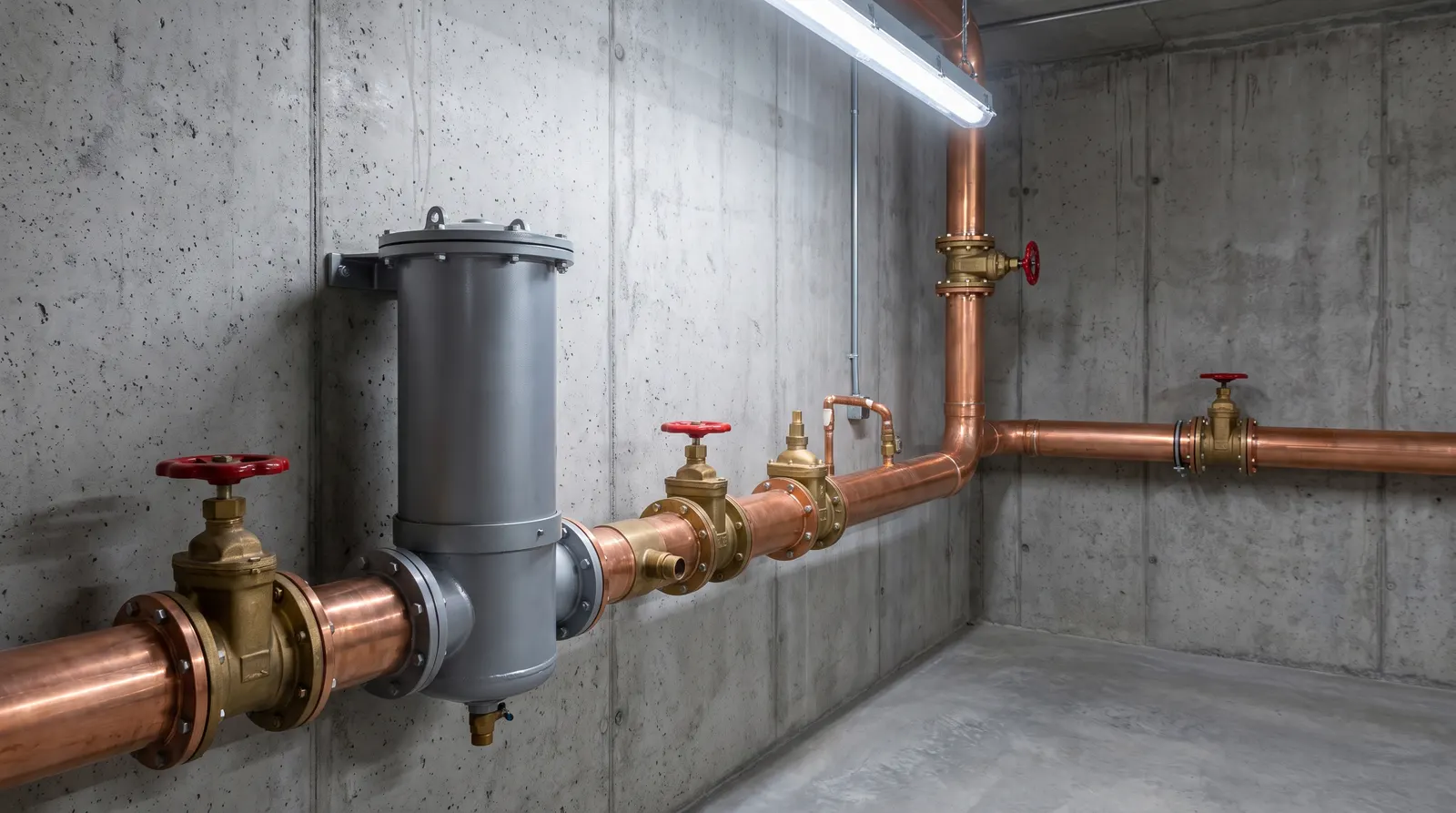
Point-of-use treats what is drunk. It does nothing for what is bathed in, washed with or fed to an appliance, and it does nothing about scale in a boiler. Where the problem is hardness across a whole building, or sediment damaging fittings, the treatment belongs on the incoming line and a point-of-use system belongs after it, not instead of it.
The comparison is set out in full in Whole-House vs. Under-Sink Water Filtration, and the finder on this site asks the four questions that decide between them.