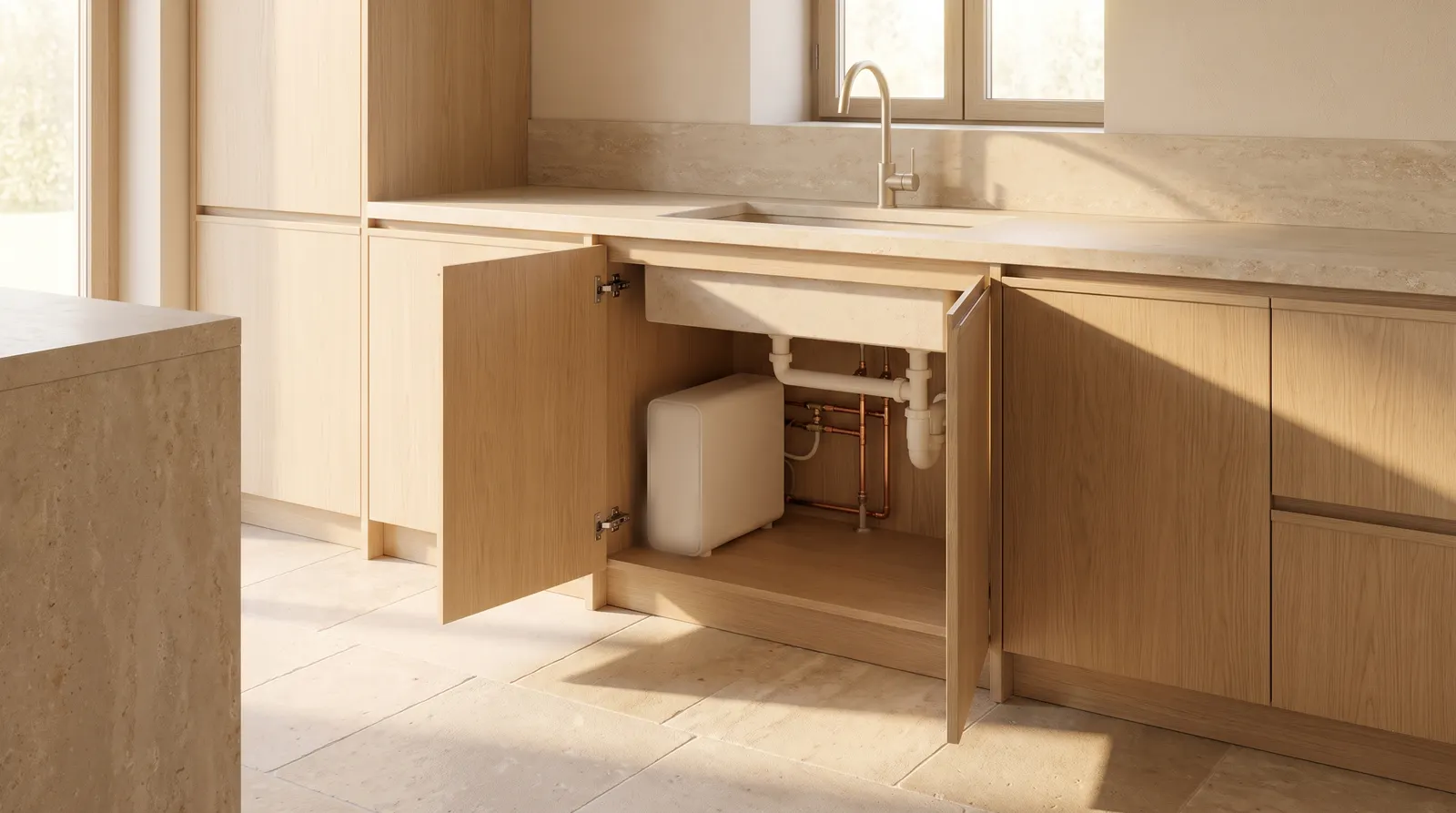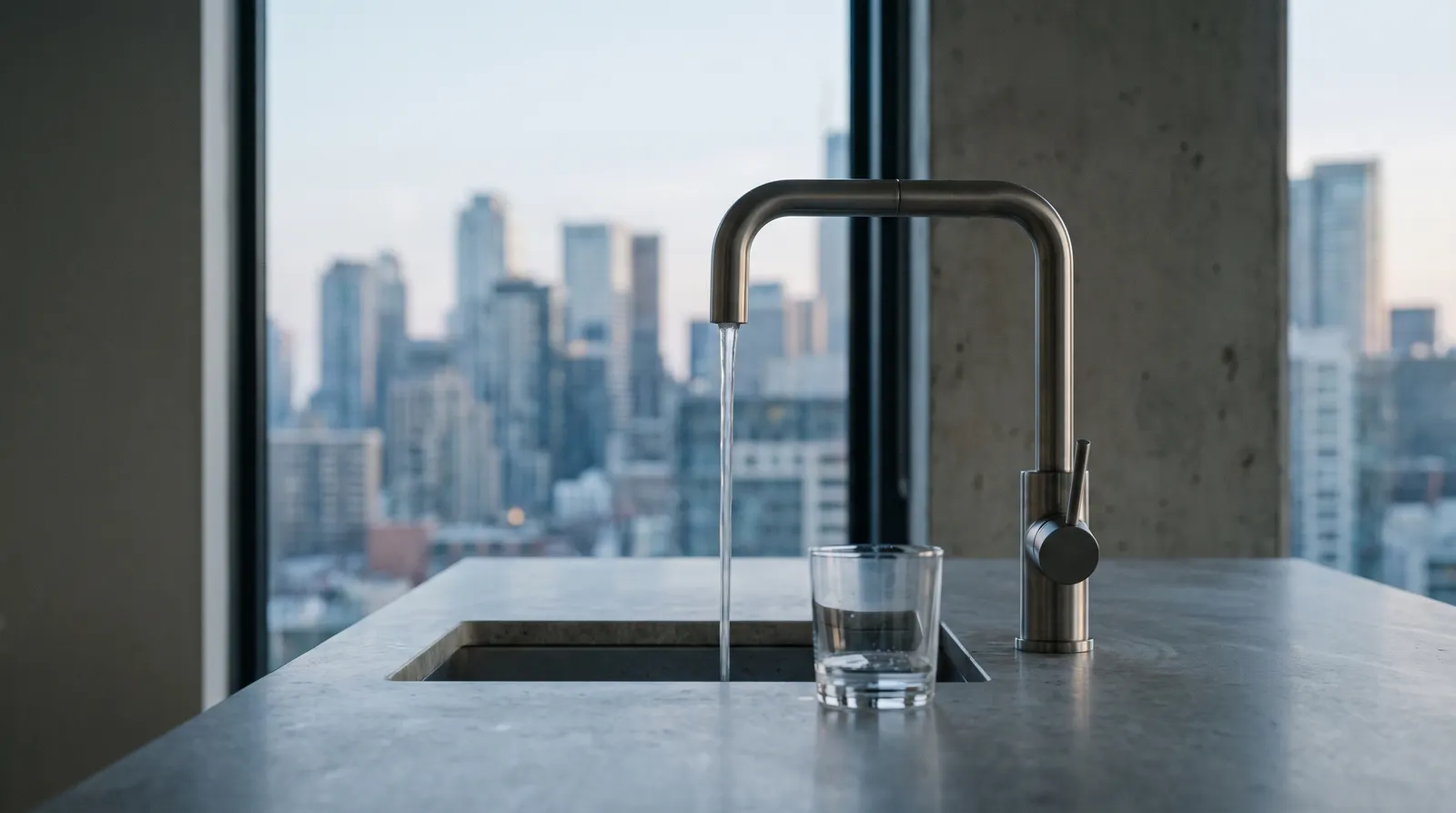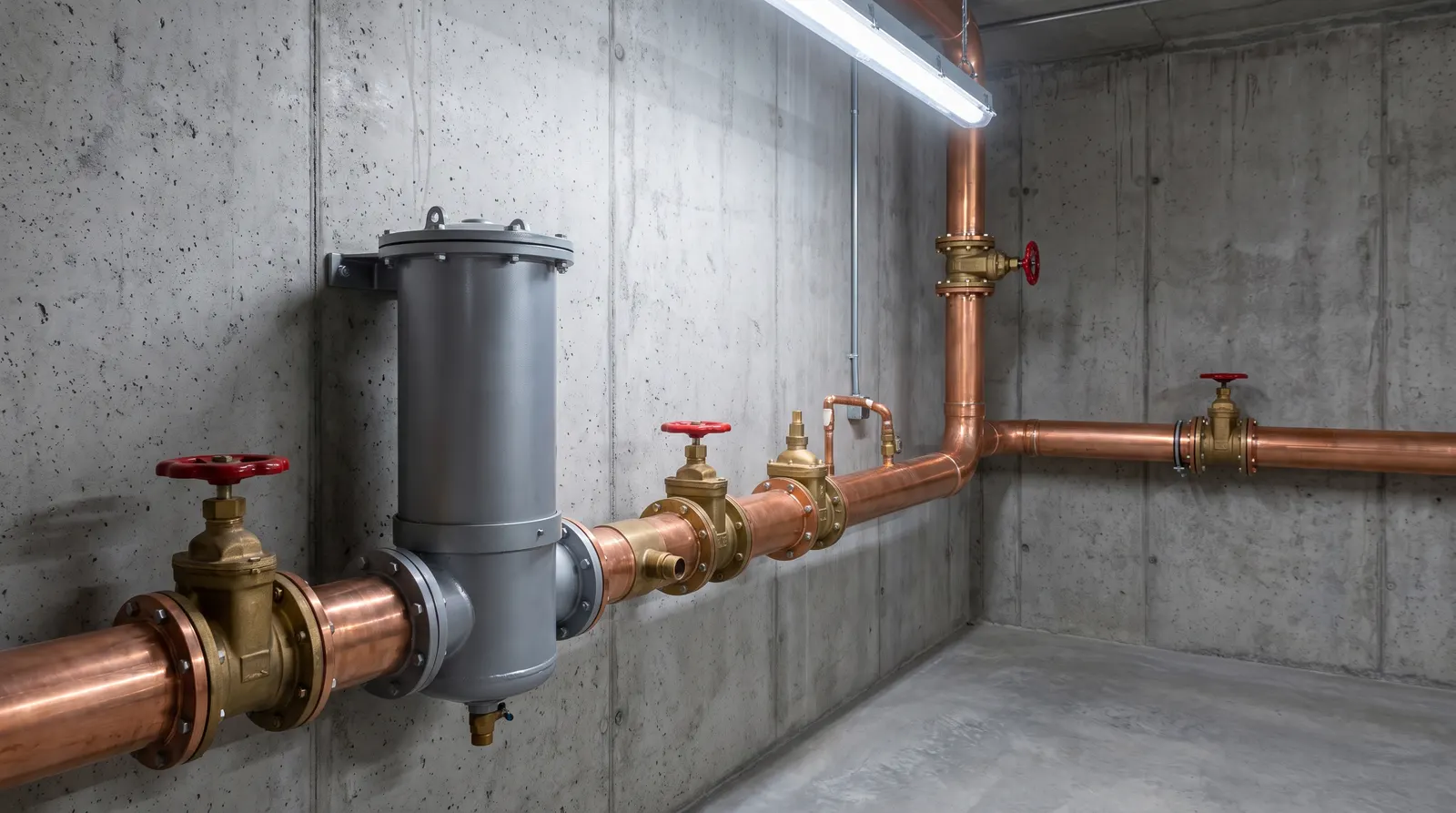
The two names describe where the system sits, not how good it is. A whole-house system treats water at the point it enters the building; an under-sink system treats it at the point it is used. That single difference decides what each can sensibly do.
What a whole-house system is for
Everything downstream of it benefits: the pipework, the water heater, the washing machine, the shower. It is the right place for sediment, for chlorine, and for hardness where scale is damaging appliances. What it is not is a way to make every tap in the house drinking-grade — treating the entire supply to that standard means treating the water used to flush toilets and water the garden as well.
What an under-sink system is for
The water you drink and cook with, which in most homes is a few percent of what comes through the meter. Treating that fraction to a higher standard is cheaper per litre and smaller in every sense: less media, less space, a shorter run of pipe between the last stage and the glass.
Why both is common
Because they solve different complaints. Scale on the kettle and short appliance lives are a whole-house problem; taste, dissolved metals and anything the household actually swallows are a point-of-use one. A whole-house sediment and carbon stage also extends the life of the cartridges under the sink, which is the quiet argument for the pair.
KomiBright's range is point-of-use: under-sink and commercial systems, plus the A95R for supplies that are not a municipal tap. Where a building needs treatment at its entry point as well, that is a separate system sized to the whole incoming line.