A utility's annual report, or a lab test on your own sample, is the cheapest thing you can do before spending on a system. Most of it is compliance reporting. Four lines decide what you should buy.
Hardness
Reported as calcium carbonate, in ppm or mg/L, or in degrees depending on the country. This is the line that predicts scale, and scale is what shortens the life of everything downstream of it — a kettle, a boiler, and the membrane in a purification system. High hardness does not rule a system out; it changes how often it needs servicing, and it may argue for treatment on the incoming line as well.
Total dissolved solids
The bulk figure for what is dissolved. Useful as the baseline you will later compare a TDS meter against, and useful to a supplier sizing a system. On its own it is not a safety figure — see what smart monitoring can and cannot tell you.
Turbidity and sediment
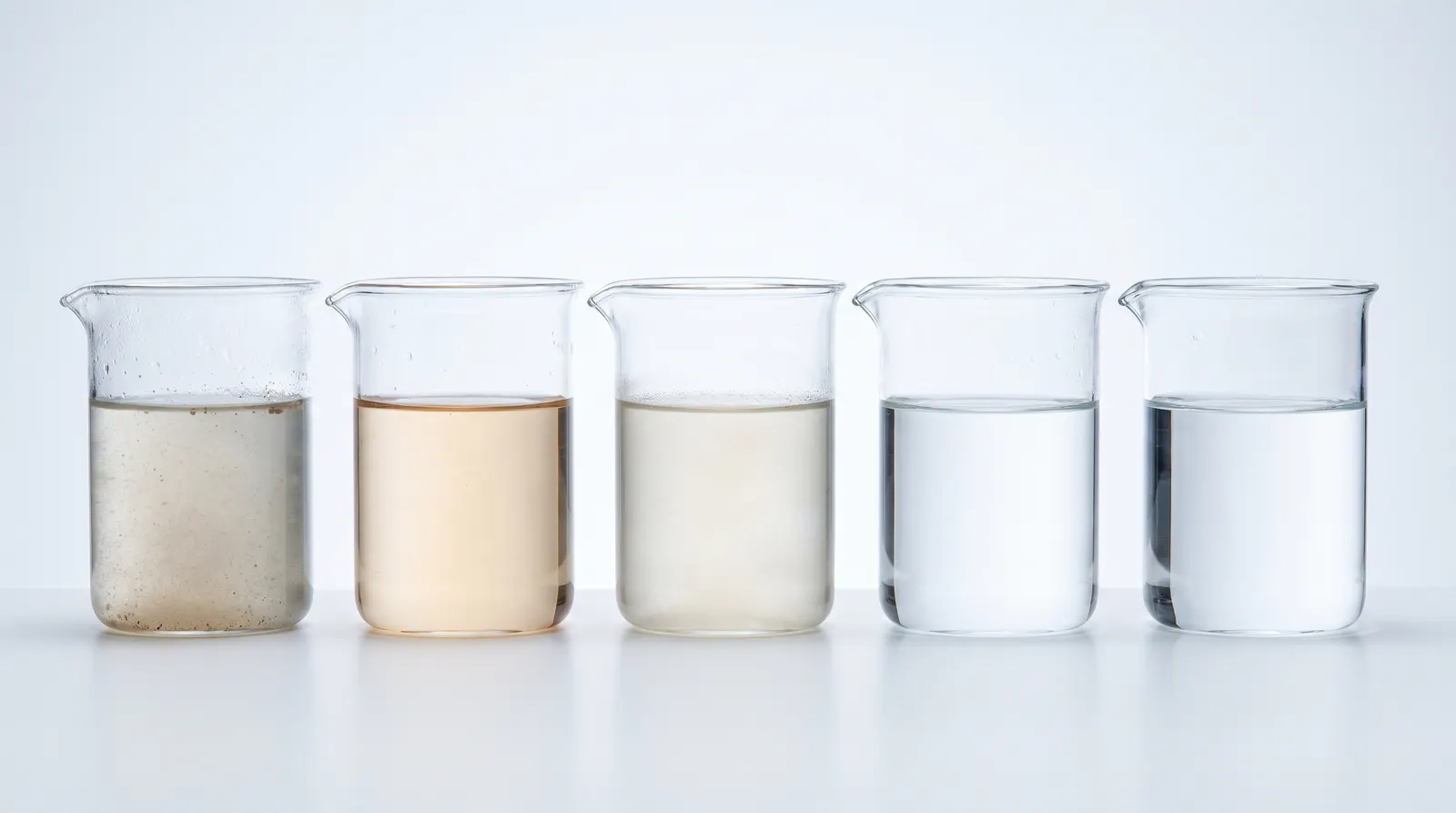
How much undissolved material the water carries. A high figure, or a supply that runs cloudy after mains work, is an argument for a sediment stage sized generously — it is the stage that protects everything after it, and the cheapest one to replace.
Anything named and regulated
If a report names a specific contaminant with a limit beside it, that is the one line to take to a supplier, because it is the only one that can be matched against a treatment method. A named substance at a stated concentration is answerable. "Better tasting water" is not.
One more line matters, and it is not on the report: the pressure at the tap the system will be fitted to. Every pump-free system carries a minimum inlet pressure, and that figure is on the model's own page and in its manual.