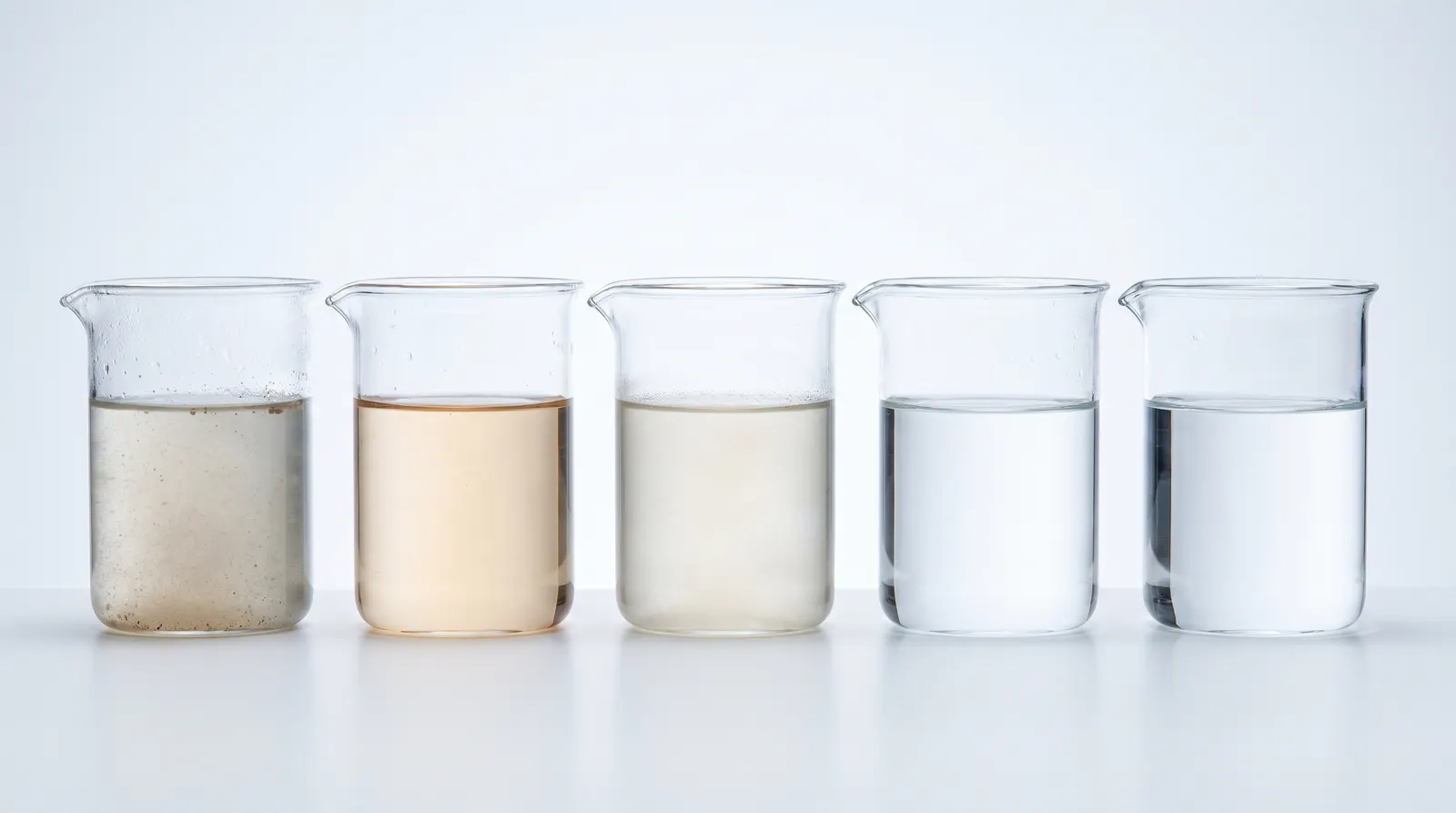
The useful question is not what a filter removes but which stage removes which class of thing. Contaminants sort into a handful of groups by size and behaviour, and each group is somebody's job.
By class, and by the stage that handles it
- Particles — sand, rust, silt, scale fragments. Sediment filtration, rated in microns. This is the only class a filter removes by straining alone.
- Chlorine and disinfection by-products, and the taste and smell they carry. Activated carbon, which adsorbs rather than strains.
- Dissolved salts and metals — lead, copper, arsenic, nitrate, and the hardness minerals. A reverse-osmosis membrane. Carbon and sediment stages do not touch them.
- PFAS, the so-called forever chemicals. Treatment research points at membranes and at specific carbon media rather than at filtration generally; this is a class where the certification on the cartridge matters more than the category name.
- Living organisms — bacteria, viruses, protozoa. A membrane is a physical barrier to them; UV inactivates them without removing them; boiling deals with them and with nothing dissolved.
Why nobody publishes one list
Removal is not a property of a technology in the abstract. It depends on the specific cartridge, the water it is fed, the pressure behind it and how long it has been in service. That is why a serious answer cites a certification against a named standard and a test protocol, and why a filter advertised as removing everything is advertising rather than data.
Start from a water report for your own supply rather than from a list of what filters can do. It tells you which of the classes above you actually have, and the answer usually rules out most of the catalogue in one page.