A membrane produces water steadily and slowly. A glass is filled quickly. Something has to reconcile the two, and the choice is between storing water in advance and producing it fast enough to keep up.
What a tank buys
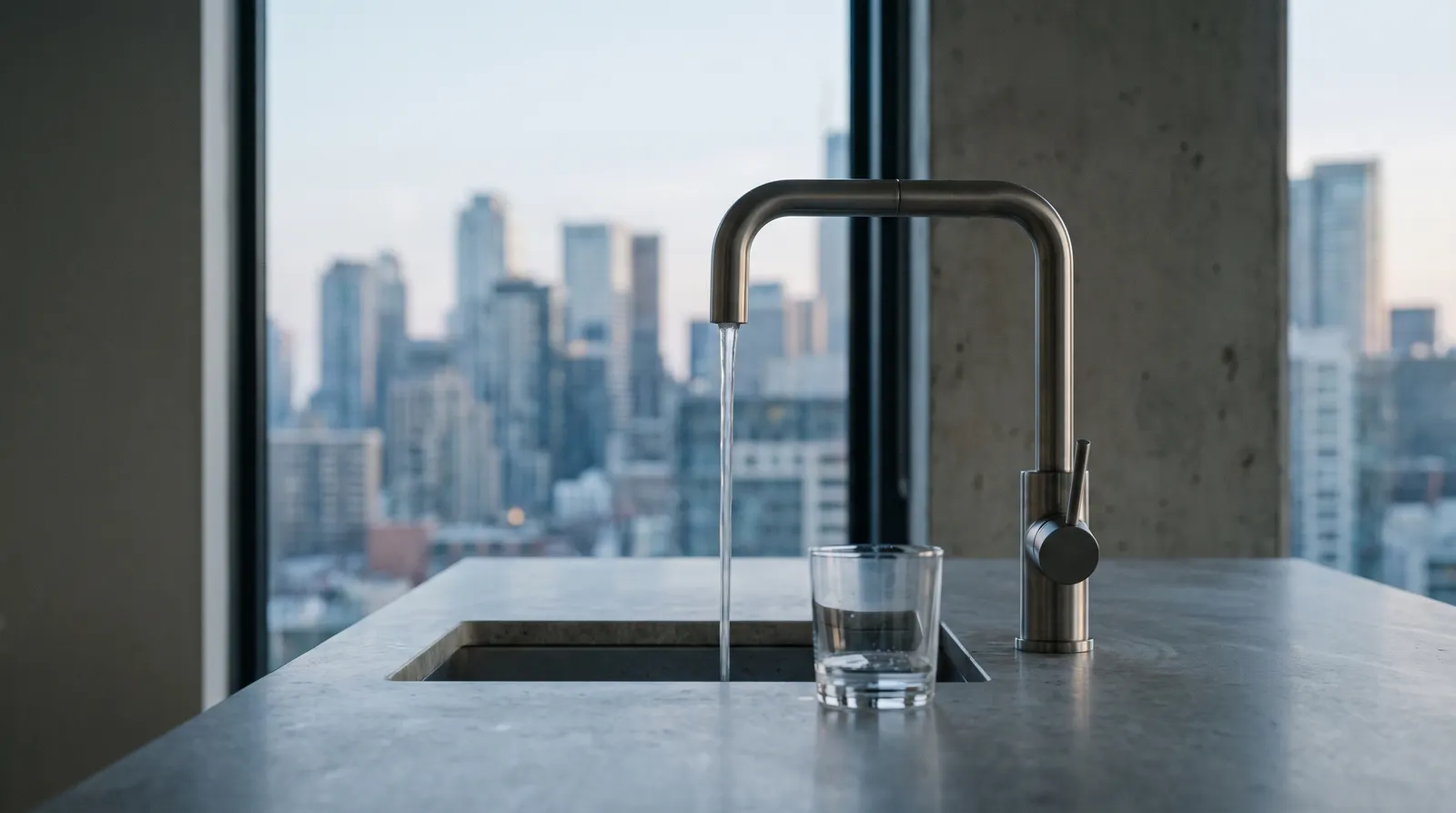
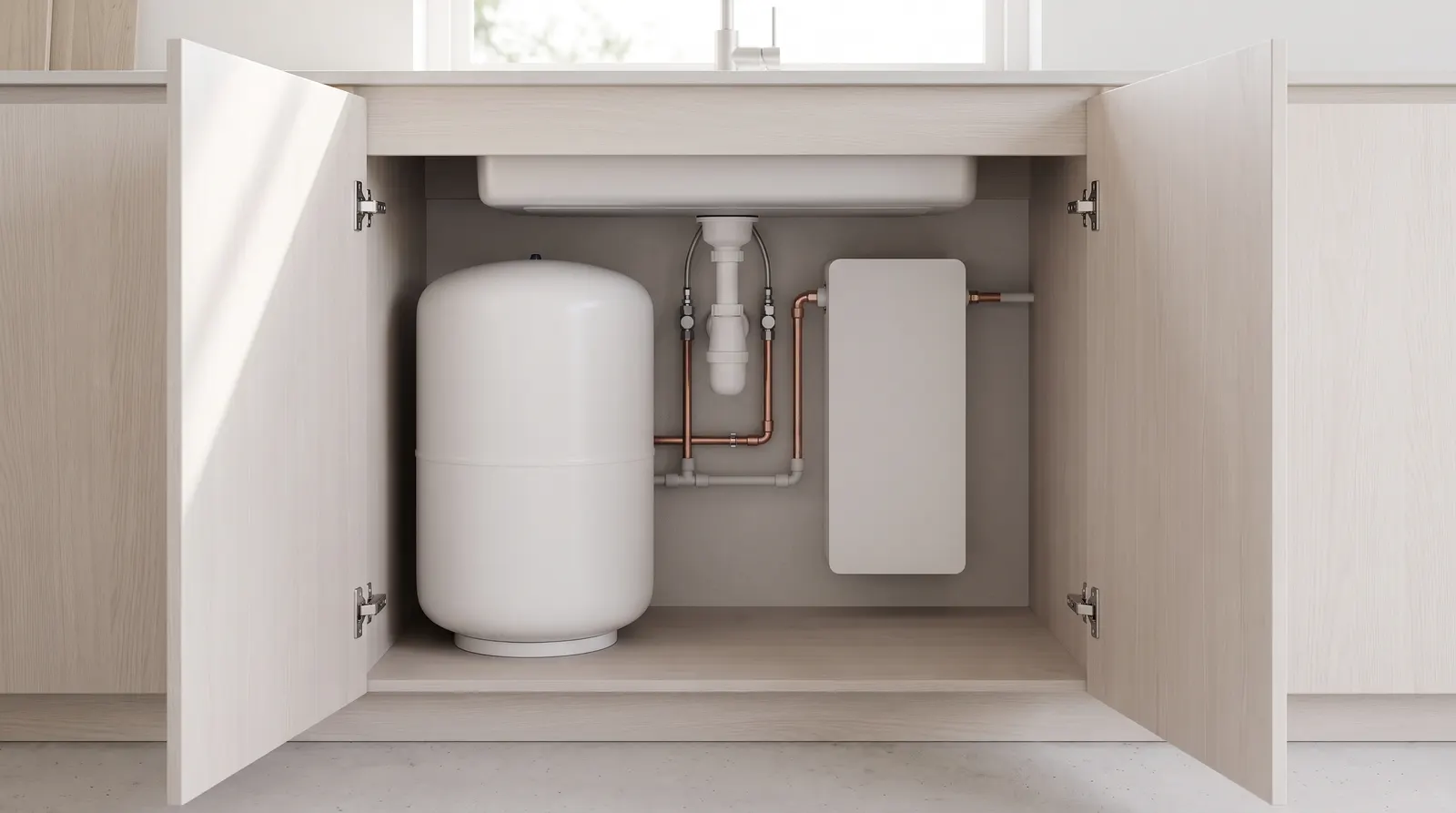
Flow. With a reservoir standing ready, a tap delivers at a normal rate until the stored volume runs down, which is why tanked systems feel unremarkable in use — the point of them is that nobody notices. They also let a slower, gentler membrane serve a household whose demand arrives in bursts.
What a tank costs
- Cabinet space, which under a sink is the scarcest thing there is.
- Standing time: water sits in the tank between draws, so the tank is a part to keep clean.
- A pressure margin, since the tank has to be filled and emptied against the supply.
What tankless changes
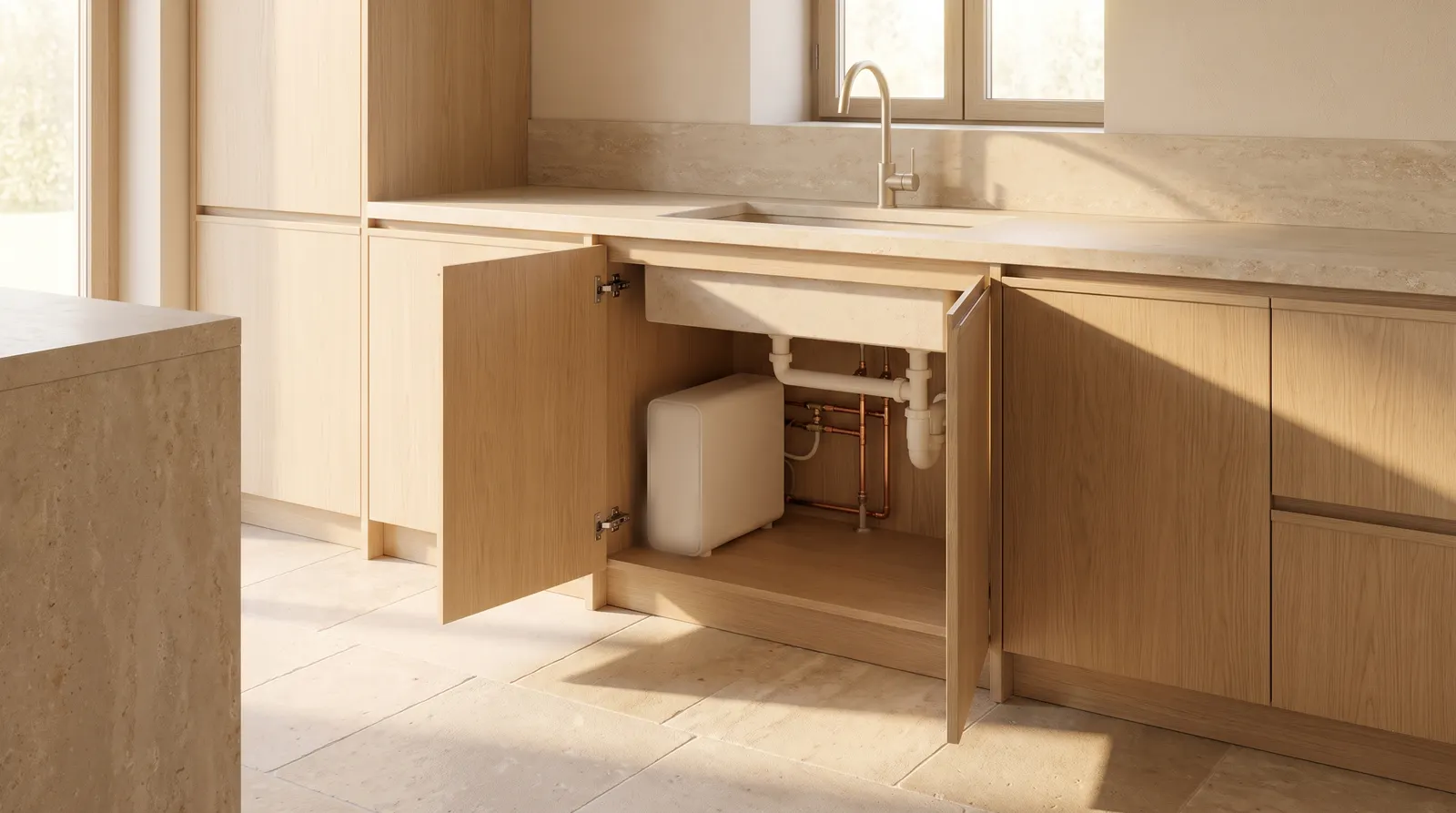
No stored volume means no standing water and a smaller footprint — often the difference between fitting under a sink and not. In exchange, the tap runs at production rate, so the membrane and the flow path have to be sized to be usable directly. That sizing is exactly what a pump-free design has to earn, and it is why inlet pressure matters more on these, not less.
Which arrangement a given model uses, and the output and minimum pressure it is rated for, are on the model's own page. The finder asks about draw pattern and pressure before it recommends either.