Coffee is mostly water, and the dissolved content of that water does two jobs at once: it takes part in extraction, and it decides how quickly a boiler scales. The two pull in different directions, which is the whole of the problem.
Extraction wants some content
Water with almost nothing dissolved in it is an aggressive solvent and a poor partner for the acids in coffee; cups pulled on it are commonly described as thin or sour. This is why baristas talk about target ranges rather than about the lowest possible reading.
The boiler wants none of the hardness
Calcium and magnesium precipitate on hot surfaces. In an espresso machine that means scale on the heating element and in the group, which changes temperature stability before it causes an outright failure — and descaling a commercial machine is a service visit, not a Sunday task.
How the two are reconciled
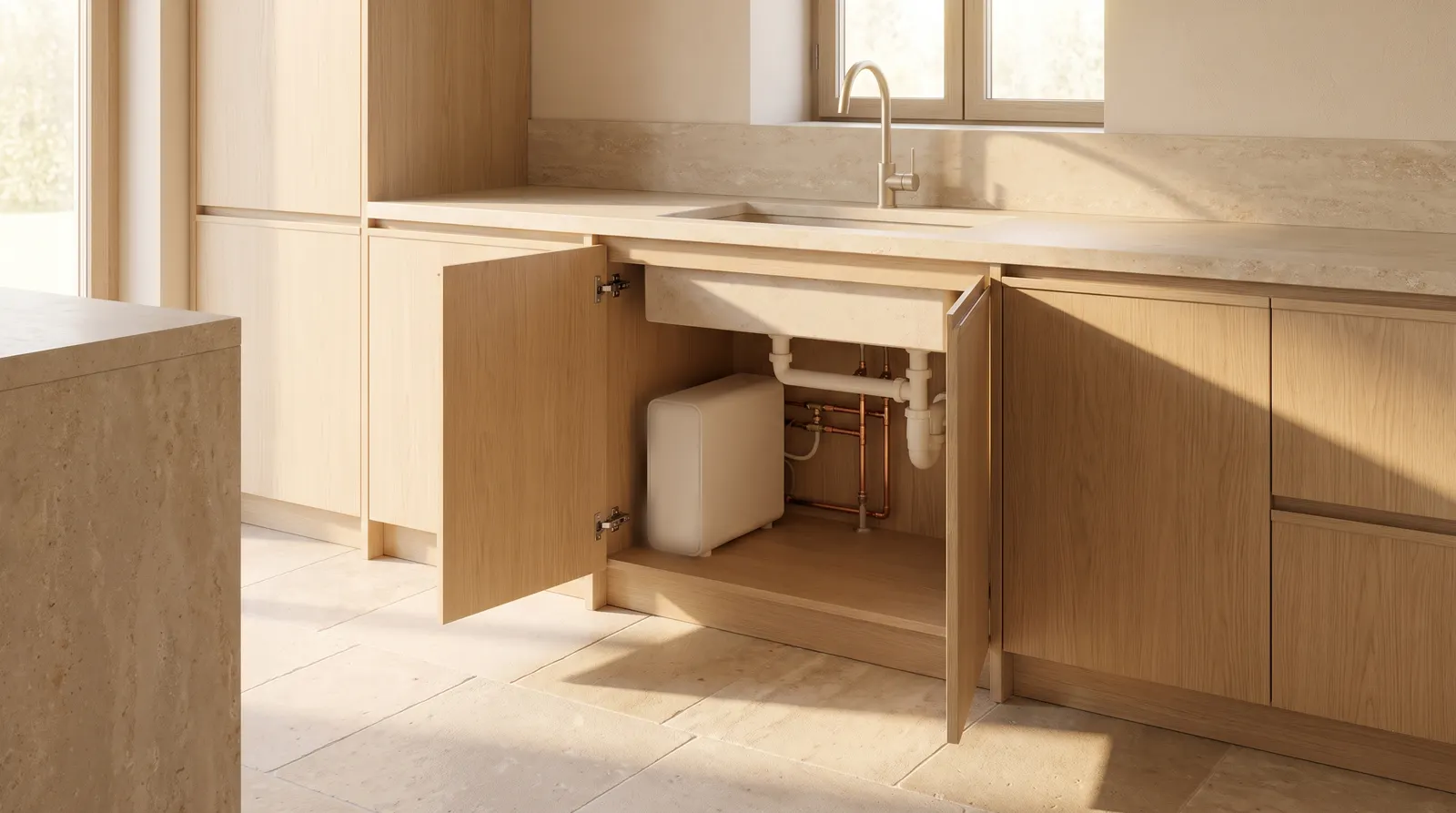
Usually by treating hard and then adding back in a controlled way: a membrane to take the load out, and a post stage or a blend to return the water to a target the roaster or the machine manufacturer specifies. Which cartridges a given model can take is a per-model question; the number to design to comes from the equipment maker, not from a filtration article.