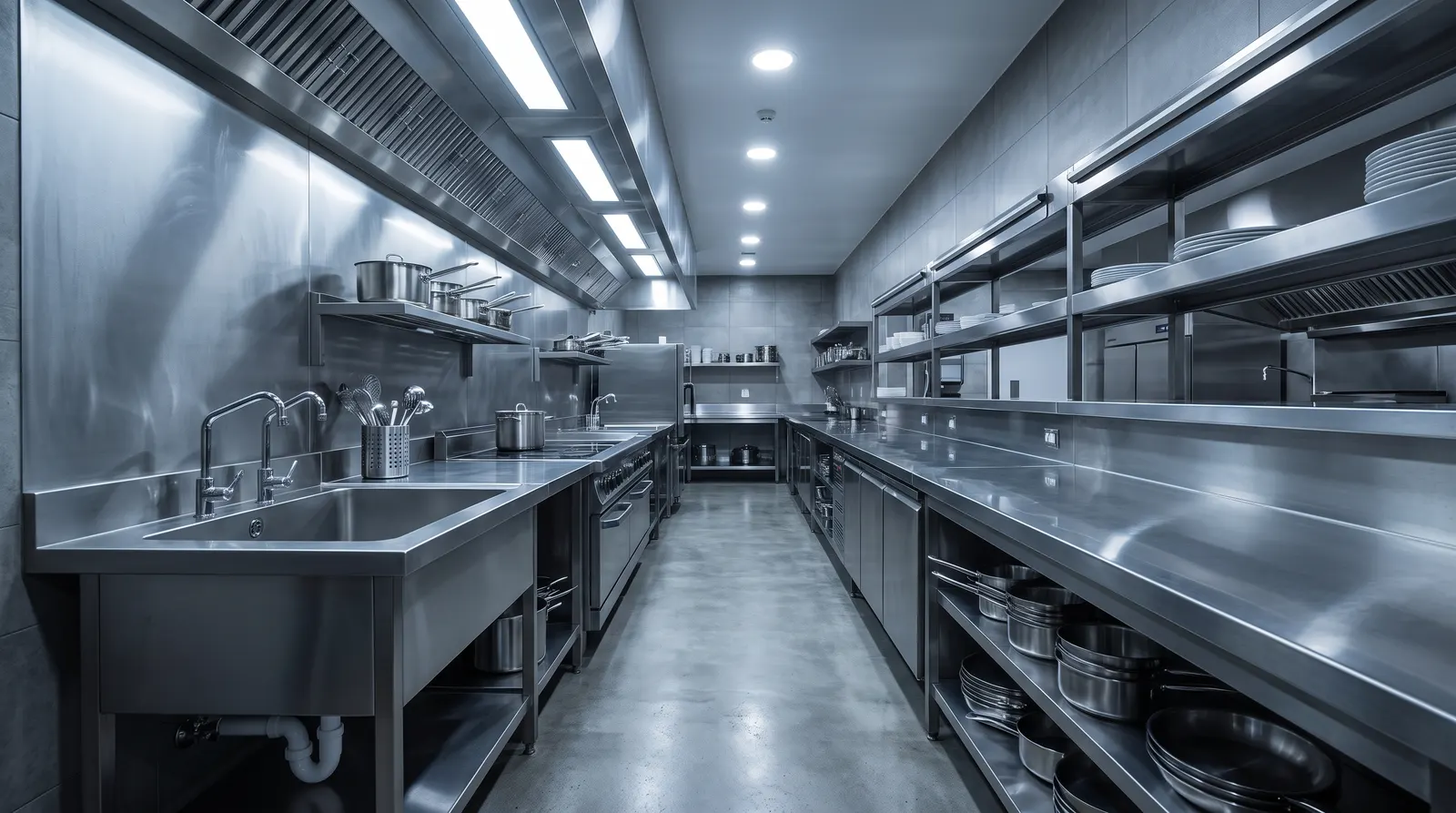
Domestic and commercial systems are rated the same way — litres or gallons per day — and that number misleads in a kitchen. Service is not spread across twenty-four hours. It arrives in a lunch rush and an evening one, and a system sized on a daily average will run empty in both.
Peak demand, and what buffers it
Two things decide whether a rush is survivable: how fast the system produces, and how much treated water is standing ready when the rush starts. A stored volume covers a short peak that production alone could not. That is the trade-off behind tank and tankless designs, which is set out in tank or tankless.
The things that decide the specification
- Covers per service, and how concentrated they are in time.
- Every draw point the system feeds: taps, ice, coffee, combi ovens.
- Incoming hardness, because scale is the running cost in a kitchen.
- Inlet pressure at the point of installation, on a pump-free system especially.
- Who changes the cartridges, and whether the cabinet can be reached during service.
Why pump-free suits a kitchen
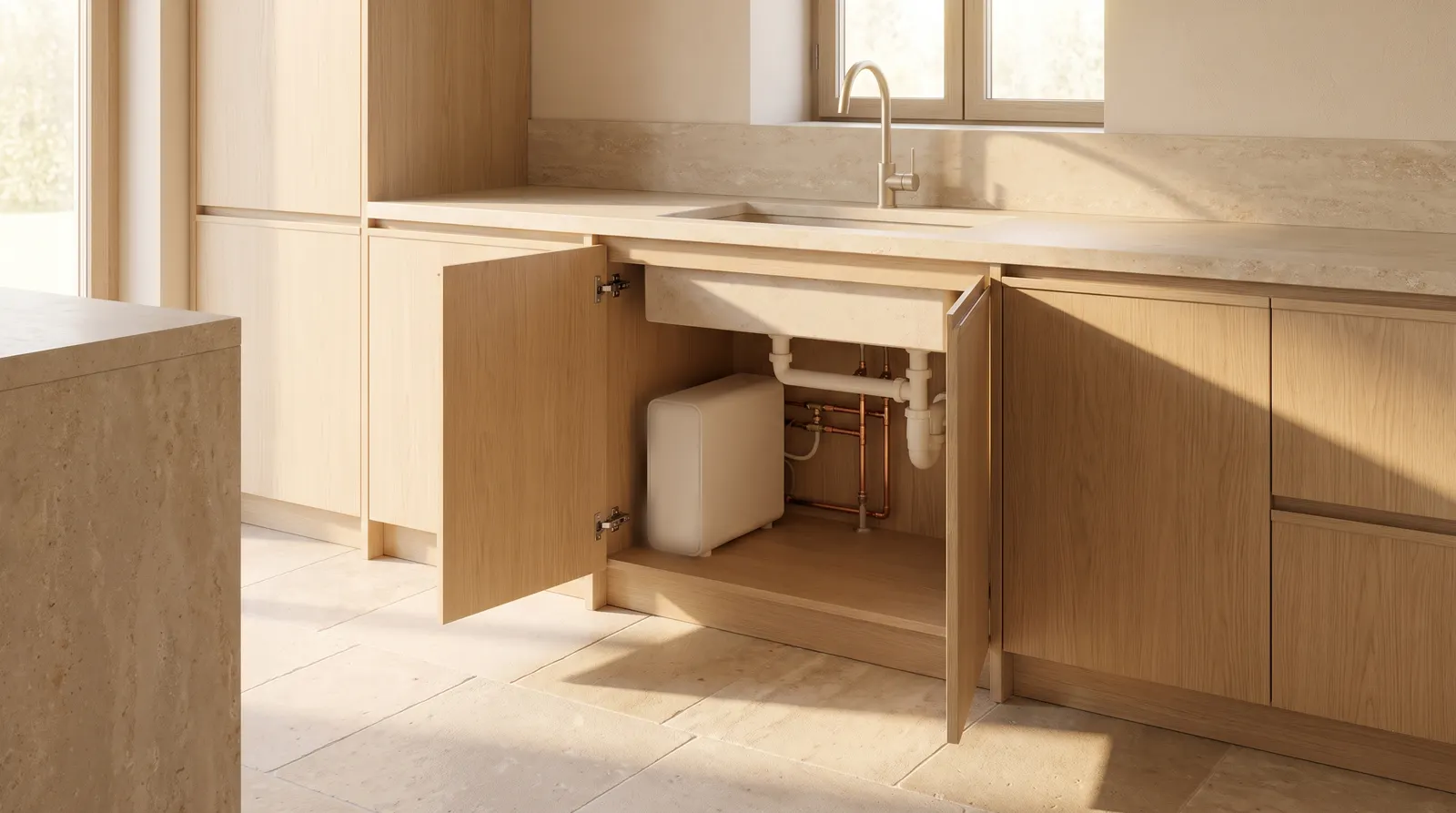
A kitchen is short of sockets, hostile to electronics and loud enough already. A system that runs on mains pressure adds no socket, no noise and no electrical inspection. The condition is the same one as everywhere: the inlet pressure has to meet the model's published minimum, and that figure is on the model's page rather than in this article.