Pressure is the one specification a buyer is most often asked for and least often has. It is also the one that decides whether a pump-free system performs, so it is worth ten minutes and a cheap gauge.
The units
Bar and psi both appear on datasheets: one bar is about 14.5 psi. Height also converts — roughly one bar per ten metres of column — which is why the top floor of a tall building is the floor with the pressure complaint.
Static and dynamic are different measurements
Static pressure is measured with nothing flowing, and it flatters. Dynamic pressure is measured while water is being drawn, and it is the one a system experiences. A supply that reads healthily at rest and drops sharply once a tap opens is telling you about a restriction — a partly closed valve, a narrow branch, an old service line — that a datasheet cannot know about.
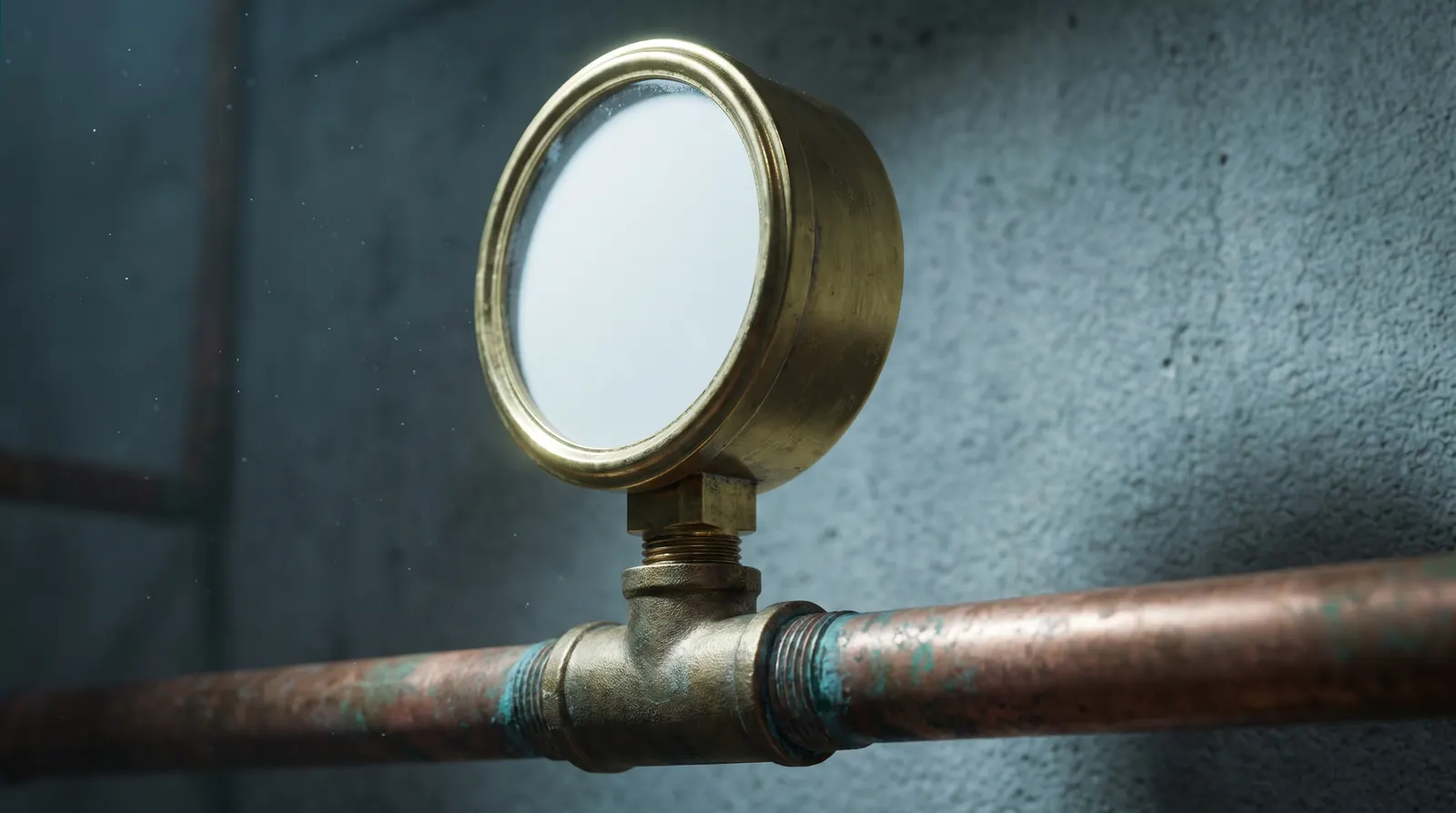
How to measure it in ten minutes
- Fit a gauge to the tap the system will feed from, not to an outside tap.
- Read it closed, then read it again with the tap running.
- Repeat at the busiest hour of the day, which is when the network is weakest.
- Compare the lower reading, not the higher, against the model's published minimum.
If the dynamic figure sits under a model's published minimum, the answer is either a different model, a fix to the restriction, or the one system in the range built with a pump. Pump-free is a statement about the pump, never about pressure.