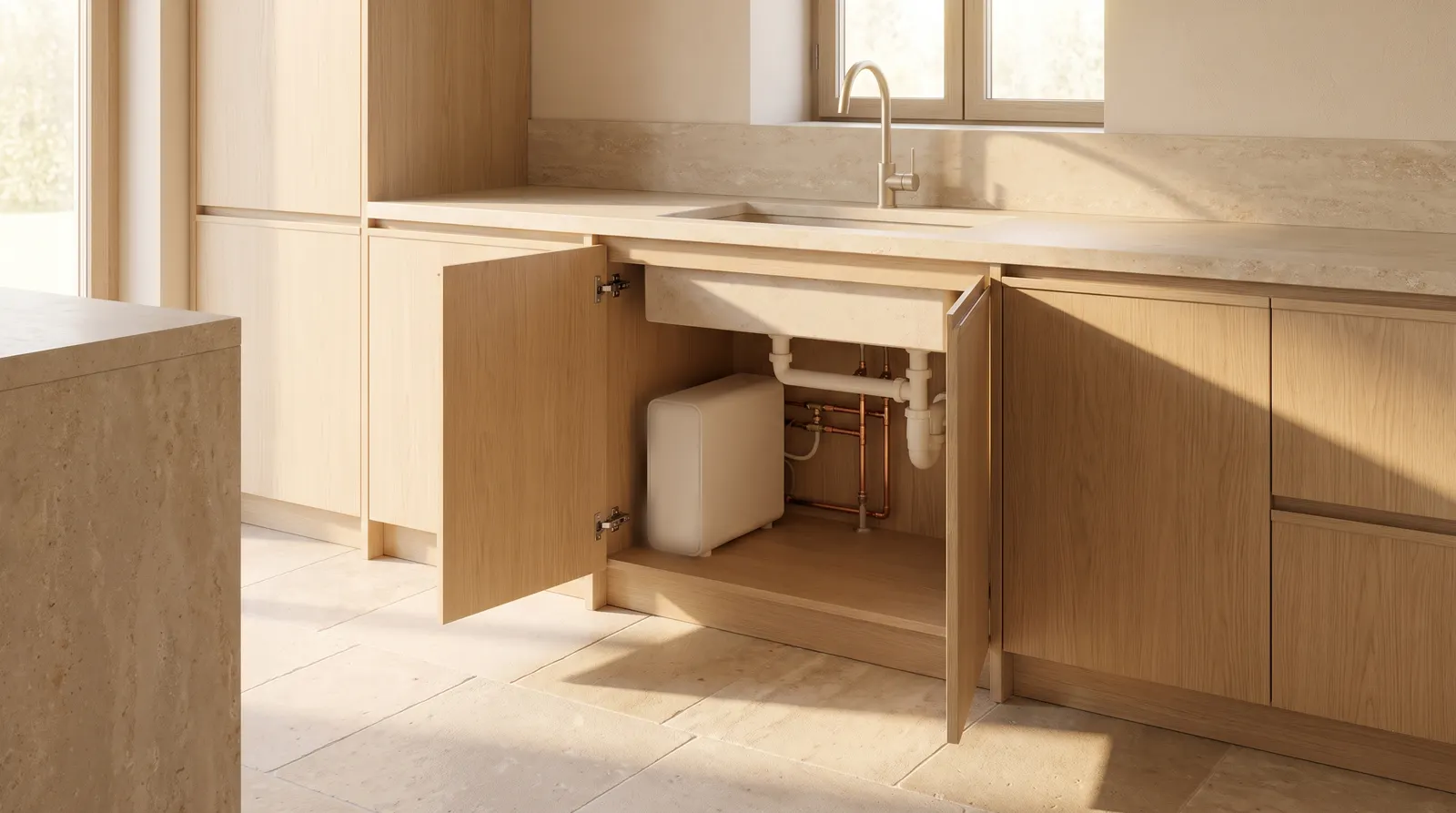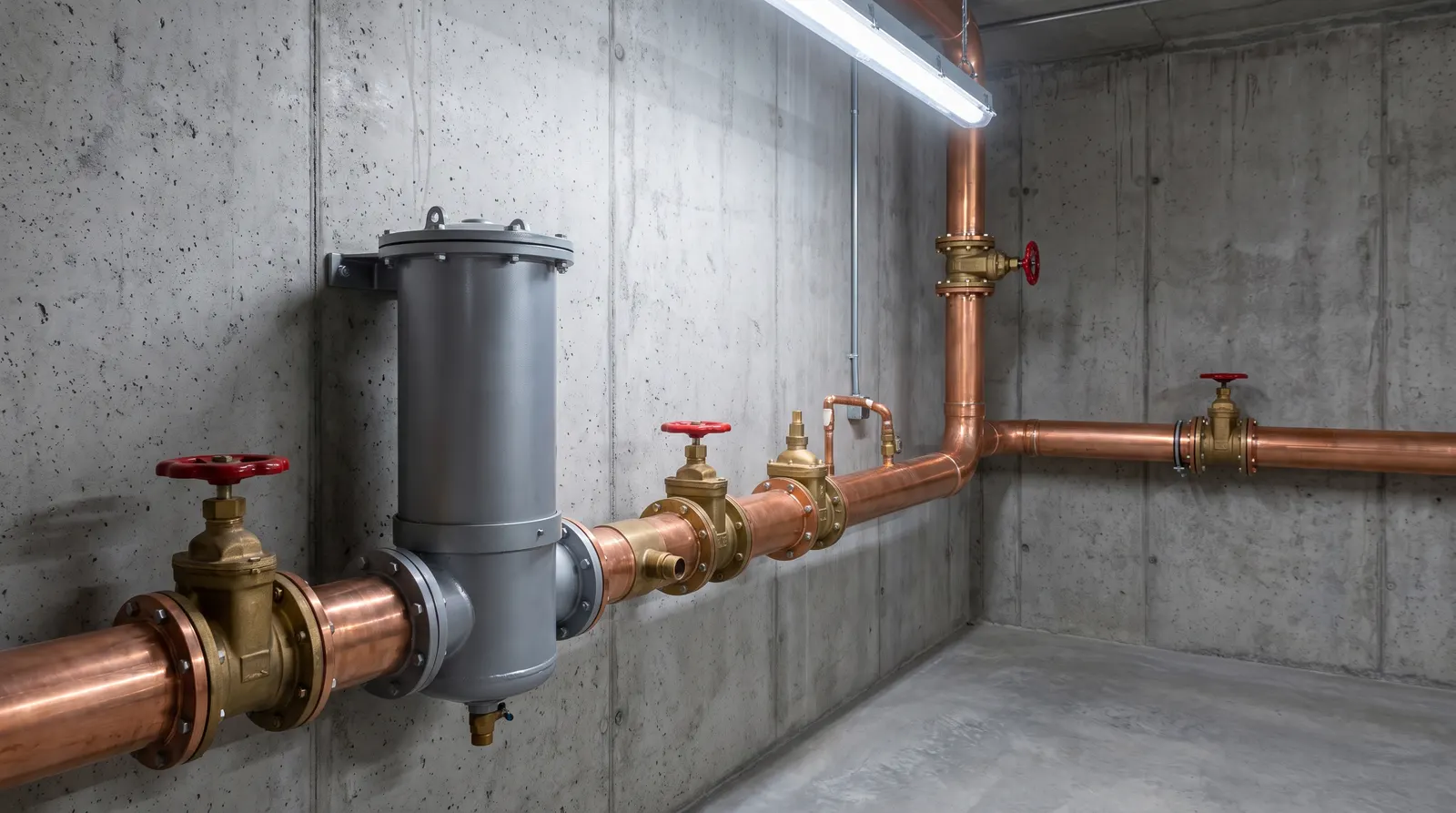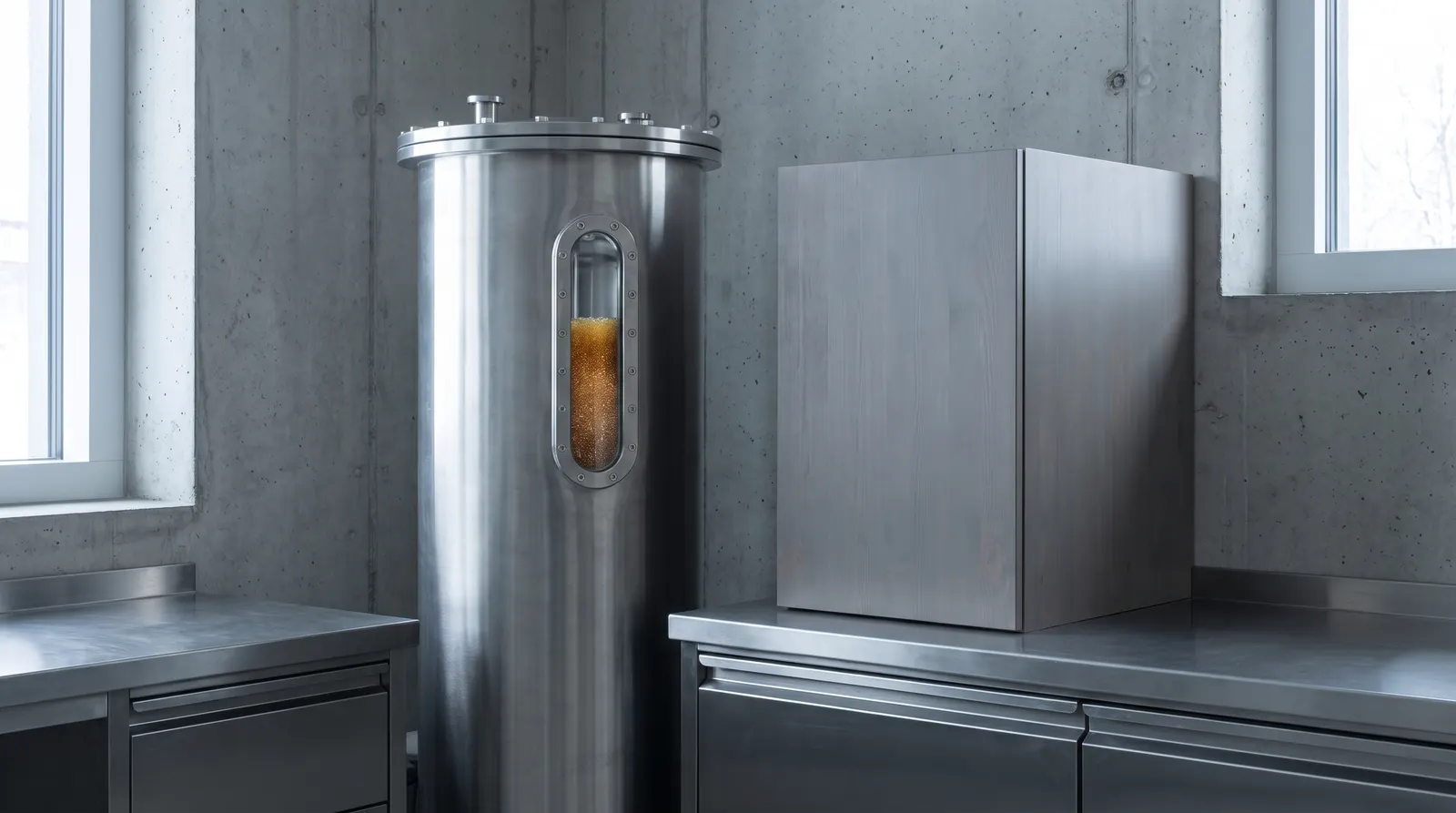
These two are compared as if they were competing products. They are not. A softener changes what hard water does to your plumbing; reverse osmosis changes what is in the water you drink.
What a softener does
Ion exchange swaps calcium and magnesium — the two that form scale — for sodium. The water is no cleaner afterwards; it is simply less inclined to leave deposits in a boiler, a heat exchanger or a shower head. It is a plumbing measure, fitted on the incoming line, and its benefit is measured in appliance life.
What RO does
A membrane separates water from most of what is dissolved in it, including hardness, and it is fitted at the tap where the water is drunk. It will not protect a building's pipework, because it treats a branch rather than the main.
Why the order matters when both are fitted
Hardness shortens membrane life by scaling it. Where water is genuinely hard, softening ahead of an RO system protects the membrane and lengthens the interval between cartridge changes. The reverse arrangement protects nothing. If only one is affordable, the deciding question is which symptom you have: scale in the kettle and on the fittings points to softening; taste, odour or a named contaminant points to filtration.