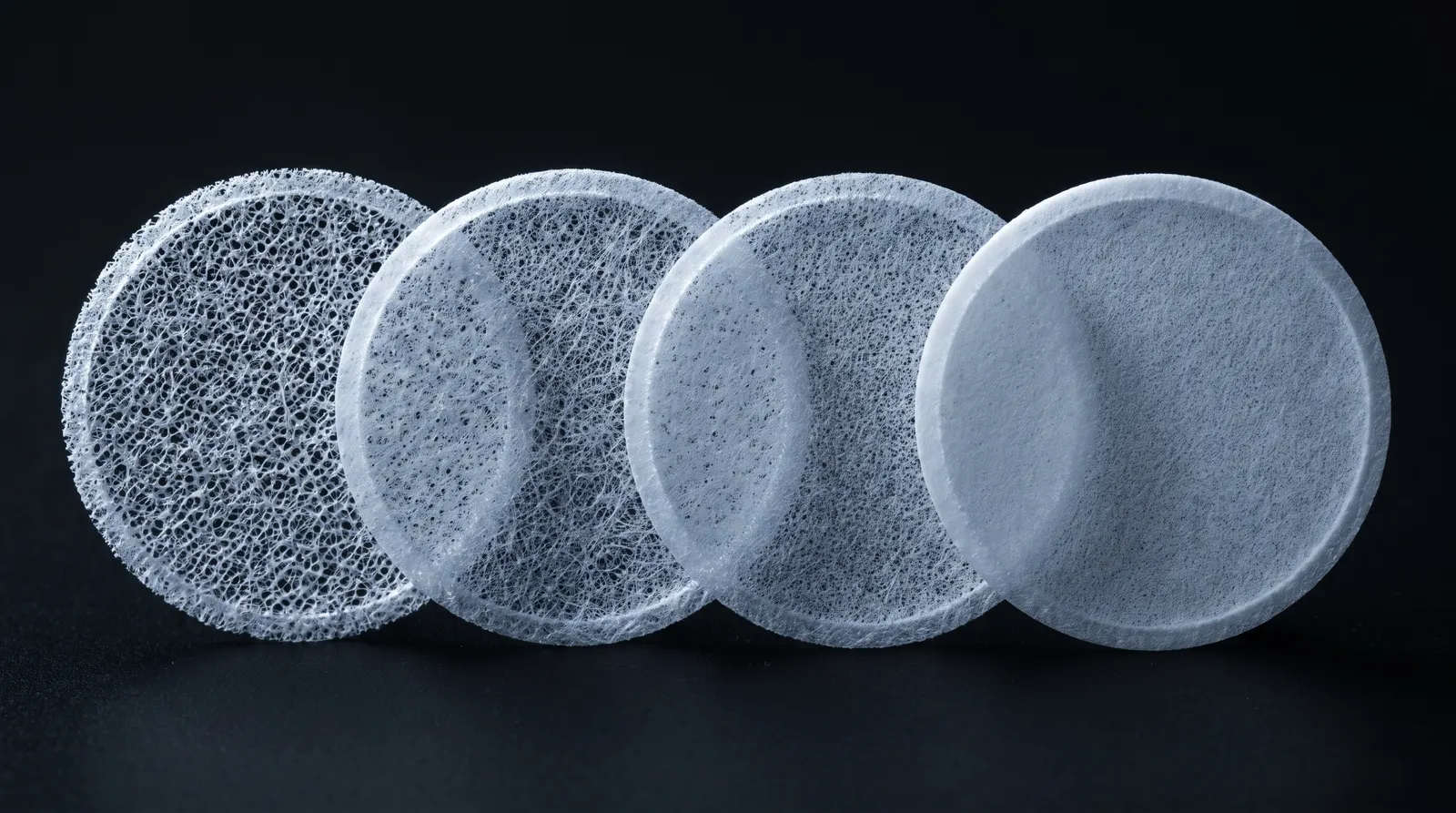
Membrane filtration is separation by pore size under pressure. The four named processes are the same idea at four scales, and the scale is what decides what passes.
The family, from coarse to fine
- Microfiltration: the coarsest. Suspended solids and larger organisms. Dissolved matter passes straight through.
- Ultrafiltration: finer. Holds back bacteria and many viruses while letting dissolved salts and minerals through, which is why UF water tastes like the supply it came from.
- Nanofiltration: finer still. Takes out a good share of hardness and larger dissolved organics while passing some monovalent salts. Often described as softening by membrane.
- Reverse osmosis: the finest in common use. Holds back the great majority of dissolved salts and metals. It is also the one that needs the most pressure, for exactly that reason.
Pressure is the cost of fineness
The finer the membrane, the harder water has to be pushed through it. That is why a specification sheet for an RO system names a minimum inlet pressure and one for an ultrafiltration cartridge often does not: they are not being asked for the same work.
Which one is the right one
If the problem is microbiological and the minerals are fine, ultrafiltration answers it with less pressure and no concentrate stream. If the problem is dissolved — salts, metals, hardness, taste that follows the dissolved load — no membrane coarser than RO will change it. The choice is set by the water report, not by preference.